| Today's Important News: 04 August 2012 Posted: 04 Aug 2012 02:48 AM PDT |
| (Online Course) Contemporary Issues for IAS Mains 2012: Govt. Plans Programmes & Policies - Empowerment of Women Posted: 04 Aug 2012 02:27 AM PDT 

Govt. Plans Programmes & Policies Social Sector Initiations (Empowerment of Women) High Level Committee on the Status of Women A High Level Committee (HLC) on the status of women has been constituted which shall undertake a comprehensive study to understand the status of women since 1989. The HLC will prepare a report on the current socio-economic, political and legal status of women in India, and evolve appropriate policy interventions based on a contemporary assessment of women's needs. Dear Candidate, This Material is from Our Study Kit of Contemporary Issues for IAS Mains 2012 . For Details Click Here read more © 2012 www.upscportal.com Study Kits for IAS Mains 2012.Books for Civil Services ExaminationsGet Your Dream Job. SUBMIT YOUR RESUME Online. Study Kits for IAS Mains 2012.Books for Civil Services ExaminationsGet Your Dream Job. SUBMIT YOUR RESUME Online. |
| (Online Course) Contemporary Issues for IAS Mains 2012: Govt. Plans Programmes & Policies - Child Development and Child Rights Posted: 04 Aug 2012 02:26 AM PDT 

Govt. Plans Programmes & Policies Child Development and Child Rights The Prime Minister's National Council On Nutrition, in its meeting on 24 November 2010 took a number of decisions to tackle the multi-faceted problem of malnutrition in the country. As a follow up, a proposal to strengthen and restructure the ICDS Scheme is being formulated. The framework to adopt multi-sectoral approach and action to address maternal and child malnutrition in selected 200 high burdened districts has been prepared. Dear Candidate, This Material is from Our Study Kit of Contemporary Issues for IAS Mains 2012 . For Details Click Here read more © 2012 www.upscportal.comStudy Kits for IAS Mains 2012.Books for Civil Services ExaminationsGet Your Dream Job. SUBMIT YOUR RESUME Online. |
| (Online Course) Contemporary Issues for IAS Mains 2012: Govt. Plans Programmes & Policies - Education Posted: 04 Aug 2012 02:21 AM PDT 

Govt. Plans Programmes & Policies Human Development (Education) Right of Children to Free and Compulsory Education The reform process initiated in 2010-11, after enactment and implementation of Right of Children to Free and Compulsory Education (RTE) Act, 2009, was continued during the year 2011-12. The Sarva Shiksha Abhiyan (SSA) framework of implementation and norms for planning interventions were revised to correspond with the provisions of the RTE Act. New interventions were approved under SSA for providing uniforms, transportation and residential facilities. Further, the fund sharing pattern between the Centre and States was revised to provide for higher central shares in the SSA outlays for States. Grants under the 13th Finance Commission became available specifically for elementary education. Government also notified the National Council for Teacher Education (NCTE) as the academic authority for laying down teacher qualifications. NCTE notified the minimum teacher qualifications in the Official Gazette and also issued guidelines for conducting Teacher Eligibility Tests. New buildings were sanctioned for 28,197 primary and 6,742 upper primary schools during the period 2010-12; 39,502 primary and 11,952 upper primary schools were opened; 4,97,992 additional class rooms, 2,48,605 toilets and 24,924 drinking water facilities were provided. 6,82,788 posts of teachers were sanctioned across various states. Dear Candidate, This Material is from Our Study Kit of Contemporary Issues for IAS Mains 2012 . For Details Click Here read more © 2012 www.upscportal.comStudy Kits for IAS Mains 2012.Books for Civil Services ExaminationsGet Your Dream Job. SUBMIT YOUR RESUME Online. |
| Today's Important News: 03 August 2012 Posted: 04 Aug 2012 02:00 AM PDT |
| (Online Course) Pub Ad for IAS Mains: Chapter: 5 Accountability & Control - CITIZEN AND ADMINISTRATION (Paper -1) Posted: 04 Aug 2012 01:02 AM PDT 

Paper - 1
Chapter: 5 (Accountability & Control) CITIZEN AND ADMINISTRATION Modern democratic states are characterised by welfare orientation. Hence, the government has come to play an important role in the socio-economic development of the nation. This resulted in the expansion of bureaucracy and the multiplication of administrative process, which in turn increased the administrative power and discretion enjoyed by the civil servants at different levels of the government. The abuse of this power and discretion by civil servants opens up scope for harassment, malpractices, maladministration and corruption. Such a situation gives rise to citizens' grievances against administration. According to the Chambers Dictionary, grievance means 'a ground of complaint; a condition felt to be oppressive or wrongful.' The success of democracy and the realisation of socioeconomic development depends on the extent to which the citizens' grievances are redressed. Therefore, the following institutional devices have been created in different parts of the world lo deal with the redressal of these grievances; The earliest democratic institution created in the world for the redressed of citizens' grievance is the Scandinavian institution of Ombudsman. Donald C. Rowat, an international authority on the Ombudsman, calls it a "uniquely appropriate institution for dealing with the average citizens' complaints about unfair 0dmm'ctrative actions." The institution of Ombudsman was first created in Sweden in 1809. Ombud' is a Swedish term and refers to a person who acts as the representative or spokesman of another person. According to Donald C. Rowat, Ombudsman refers to "an officer appointed by the legislature to handle complaints against administrative and judicial action." The Swedish Ombudsman deals with the citizens' grievances in the following matters. -
Abuse of administrative discretion, that is, misuse of official power and authority. -
Maladministration, that is, inefficiency in achieving the targets. -
Administrative corruption, that is, demanding bribery for doing things. -
Nepotism, that is, supporting one's own kith and kin in matters like providing employment and so on. -
Discourtesy, that is, misbehavior of various kinds, for instance, use of abusive language. The Swedish Ombudsman is appointed by the Parliament for a term of four years. He can he removed only by the Parliament on ground of its loss of confidence in him. He submits his annual report to the Parliament and hence, is also known as 'Parliamentary Ombudsman.' But, he is independent of the Parliament (legislature) as well as the executive and judiciary. The Ombudsman is a constitutional authority and enjoys the powers to supervise the compliance of laws and regulations, by the public officials and see that they discharge their duties properly. In other words, he keeps a watch over all public officials—civil, judicial and military—so that they function impartially, objectively and legally, that is, in accordance with the law. However, he has no power to reverse or quash a decision and has no direct control over administration or the courts. The Ombudsman can act either on the basis of a complaint received from the citizen against unfair administrative action or suo moto (i.e. on his own initiative). He can prosecute any erring official including the judges. However, he himself cannot inflict any punishment. He only reports the matter to the higher authorities for taking the necessary corrective action. In sum, the characteristics of the Swedish institution of Ombudsman are: -
Independence of action from the executive. -
Impartial and objective investigation of complaints. -
Suo moto power to start investigations. -
Uninterrupted access to all the files of administration. -
Right to report to the Parliament as opposed to the executive. The institution of ombudsman is based on the doctrine of administrative accountability to legislature. -
Wide publicity given to its working in press and others. -
Direct, simple, informal, cheap and speedy method of handling the complaints. From Sweden, the institution of Ombudsman spread to other Scandinavian countries—Finland (1919), Denmark (1955) and Norway (1962). New Zealand is the first Commonwealth country in the world to have adopted the Ombudsman system in the form of Parliamentary Commissioner for Investigation in 1962. The United Kingdom adopted the Ombudsman-like institution called Parliamentary Commissioner for Administration in 1967. Since then, more than 40 countries of the world have adopted the Ombudsman-like institutions with different nomenclature and functions. The Ombudsman in India is called as Lokpal/Lokayukta. Donald C. Rowat says that the institution of Ombudsman is a 'bulwark of democratic government against the tyranny of officialdom." While Gerald E. Caiden described the Ombudsman as "institutionalised public conscience." Another unique institutional device created for the redressal of citizens' grievances against administrative authorities, is the French system of Administrative Courts. Due to its success in France, the system has gradually spread to many other European and African countries like Belgium, Greece and Tuikey. The socialist countries like the fonner USSR, China, Poland, Hungary, Czechoslovakia and Romania have created their own institutional device for the redressal of citizens' grievances. It is called Procurator System in these countries. It should be noted here that the office of the Procurator-General is still functioning in Russia. He is appointed for a tenure of seven years.
The Parliamentary Commissioner for Administration of the UK and the Administrative Courts System of France are explained in detail in the next chapter entitled 'Administrative Systems' under appropriate heads. Dear Candidate, This Material is from Public Administration Study Kit for Civil Services Main Examinations. For Details Click Here read more © 2012 www.upscportal.comStudy Kits for IAS Mains 2012.Books for Civil Services ExaminationsGet Your Dream Job. SUBMIT YOUR RESUME Online. |
| (Online Course) History for IAS Mains: Regional States during Gupta Era - Kadamba Dynasty Posted: 04 Aug 2012 12:24 AM PDT 

Regional States during Gupta Era Topic: Kadamba Dynasty Answer:There were several regional states durin the Gupta Period. Kadamba Dynasty (345 - 525 CE) was a primeval majestic dynasty of Karnataka that ruled from Vaijayanti or Banavasi in present day Uttara Kannada district. The decline of the Satavahana power in the Deccan was followed by the rule of many lesser dynasties like the Chutus, the Abhiras and the Ikshvakus during the third century A.D. the Karnataka area, however emerged out of this political confusion in the following century, when the Kadambas of Banavasi rose to prominence. The dynasty later continued to rule as a feudatory of larger Kannada empires, the Chalukya and the Rashtrakuta empires for over five hundred years, during which time they branched into Goa, Hanagal, and Chandavar. Mauryas, Satavahanas and Chutus were the pre Kadamba rulers where the ruling families were not natives of the region. Kadamba dynasty is important because it was the first indigenous dynasty to use Kannada at an administrative level. Kadambas kept paying nominal allegiance to other major power brokers of Deccan like Yadavas and Hoysalas of Dorasamudra and thus mantained their independence. Four different families of Kadambas ruled in southern India which was Kadamabas of Hangal, Kadambas of Goa, Kadambas of Belur and Kadambas of Banvasi. Dear Candidate, This Material is from History Mains Study Kit for Civil Services Main Examinations. For Details Click Here read more © 2012 www.upscportal.comStudy Kits for IAS Mains 2012.Books for Civil Services ExaminationsGet Your Dream Job. SUBMIT YOUR RESUME Online. |
| (Online Course) GS Concepts : Science and technology in India - 12th Plan Policy and Approach Posted: 03 Aug 2012 11:41 PM PDT 

Subject : Science and technology in India
Chapter : Policy Planning Topic: 12th Plan Policy and Approach Science and Technology Policy, 2003 Policy Objectives Recognising the changing context of the scientific enterprise, and to meet present national needs in the new era of globalisation, the Government has enunciated the following as objectives of the Science and Technology Policy: - To ensure that the message of science reaches every citizen of the country, so that scientific temper is advanced and we emerge as a progressive and enlightened society.
- To ensure food, agricultural, nutritional, environmental, water, health and energy security of the people on a sustainable basis.
- To mount a direct and sustained effort on alleviation of poverty, removal of hunger, malnutrition, reduction of regional imbalances, both rural and urban, and generation of employment, by using scientific and technological capabilities along with traditional knowledge pool.
- To vigorously foster scientific research in universities and other academic, scientific and engineering institutions.
- To promote the empowerment of women in all science and technology activities and ensure their full and equal participation.
- To provide necessary autonomy and freedom of functioning for all academic and R&D institutions,
- To accomplish national strategic and security related objectives, by using the latest advances in science and technology.
These objectives can be best realised only by a dynamic and flexible science and technology policy. This policy reiterates India's commitment to participate as an equal and vigorous global player in generating and harnessing advances in science and technology for the benefit of all humankind. Strategy and Implementation Plan The implementation, strategy identifies the specific plans, programmes and projects, with clearly defined tasks, estimates of necessary resources, and time targets. Some of key elements of implementation strategy are: Dear Candidate, This Material is from General Studies Mains Study Kit for Civil Services Main Examinations. For Details Click Here read more © 2012 www.upscportal.comStudy Kits for IAS Mains 2012.Books for Civil Services ExaminationsGet Your Dream Job. SUBMIT YOUR RESUME Online. |
| (Current Affairs) Person in News | August : 2012 Posted: 03 Aug 2012 02:58 AM PDT |
| (Current Affairs) Sports | August : 2012 Posted: 03 Aug 2012 02:48 AM PDT 

 Sports CRICKET - MAHENDRA SINGH DHONI APPOINTED BRAND AMBASSADOR
- DANISH KANERIA WAS BANNED BY ECB
- KEVIN PIETERSEN ANNOUNCED RETIREMENT
TENNIS |
| (Magazine) Yojana Magazine: Issue August 2012 Posted: 03 Aug 2012 02:46 AM PDT 


Yojana Magazine: Issue August 2012 Every year we celebrate our Independence Day with reverence as we pay homage to our martyrs and freedom fighters. It is also the time to introspect on our achievements, our successes and failures and chart out the path that has to be travelled. Yet sixty five years of independence is but a small step in the long journey of India's history and civilization. The advent of political democracy in India has been unique and distinct. The Indian Constitution, created a democratic republic and pledged to secure justice, liberty, equality and fraternity for all its citizens. Universal adult franchise was provided for all at one go and provisions were built into the Constitution for affirmative action in favour of the disadvantaged and weaker sections. Economic development at the dawn of independence was shaped by India's colonial past and the nationalist present. The state was to a play dominant role in the process of development with conscious efforts to integrate with the world economy. read more © 2012 www.upscportal.comStudy Kits for IAS Mains 2012.Books for Civil Services ExaminationsGet Your Dream Job. SUBMIT YOUR RESUME Online. |
| (Download) Frontline Magazine: Issue - July 28 - August 10, 2012 Posted: 03 Aug 2012 01:53 AM PDT 

 VOL.29 :: NO.15 :: July 28 - August 10, 2012 COVER STORY (Pages: 26 :: File Size: 2.59 MB) NATIONAL (Pages: 50 :: File Size: 5.25 MB) - KARNATAKA: Power and pain
- Inter view: Jagdish Shettar
- Interview: D.V. Sadananda Gowda
- WEST BENGAL: GJM's walkover in the hills
- ESSAY: Sajjad Zaheer, a versatile communist
- ARCHAEOLOGY: Tamil Nadu: Unearthing an industrial past at Kodumanal
- INTERVIEW: Madhav Gadgil, Chairperson, Western Ghats Ecology Expert Panel
- LITERATURE: Fault lines of Hindi and Urdu
- CINEMA: Gangs of Wasseyput: Blood and lust
- OBITUARY:
- Mrinal Gore: Feisty activist
- Rajesh Khanna: Heart-throb of an era
INTERNATIONAL (Pages: 18 :: File Size: 1.39 MB) - MEXICO: Disputed victory
- UNITED STATES: Why Obama can't
- EGYPT: Battle of wits
- PALESTINE: Arafat poisoned?
- U.S.: USS Ponce in the Gulf
- TENNIS: Wimbledon: Throne regained
read more © 2012 www.upscportal.comStudy Kits for IAS Mains 2012.Books for Civil Services ExaminationsGet Your Dream Job. SUBMIT YOUR RESUME Online. |
| (Download) UPSC: IPS Limited Competitive Examination 2012 : (Subjective Type Paper - IV - 'Essay') Posted: 03 Aug 2012 01:24 AM PDT |
| (Online Course) History for IAS Mains: Guptas, Vakatakas and Vardhanas - Polity and administration Posted: 03 Aug 2012 01:14 AM PDT 

Guptas, Vakatakas and Vardhanas Topic: Polity and administration Q. What are the salient features of the administrative system of the Guptas? Answer : Contemporary inscriptions and literary sources throw lightt on the polity and administrative system of the Gupta period. Land and land relations acquired central stage in the economic life of the period and flourishing trade of the post Mauryanpre-Gupta period declined sharply in this period. The period was also marked by the growing significance of land grants which led to decentralization of political authority of the king and finally gave birth to feudalism in Indian history. Dear Candidate, This Material is from History Mains Study Kit for Civil Services Main Examinations. For Details Click Here read more © 2012 www.upscportal.comStudy Kits for IAS Mains 2012.Books for Civil Services ExaminationsGet Your Dream Job. SUBMIT YOUR RESUME Online. |
| (Online Course) Pub Ad for IAS Mains: Chapter: 4 Organisation - PPP (Public Private Partnership) (Paper -1) Posted: 03 Aug 2012 12:43 AM PDT 

Paper - 1
Chapter: 4 (Organisation) PPP (Public Private Partnership) It is one of the current as well as most frequently used strategy to address many of the issues today. It is development having recent character. This is one of the most frequently and strategy. The collaboration between public agencies with that of Private organisation, agencies which include market and also civil society organizations as well as private individuals for addressing specified public purposes under agreed terms and conditions. It has been outlined by the current deputy chairman of planning commission Montek Singh Ahluwalia that- PPP is not about private project with Public association nature it is about public project with private association". (Public goals & public issues)
Aim is to achieve public goals involves role of government which ensures the legitimacy of project, citizens support to project & finance, by assuming for itself social, political and environmental risks i.e. project. -
Environmentally sound -
Socially equitable -
Politically viable Private sector invests in managerial efficiency technological investment, overall effectiveness also with additional finance along with it assumes to itself the operational risks. -
Brief Background to PPP -
Theoretical orientation to PPP -
Forms of PPP -
Small analysis of PPP -
PPP in the context of India Brief background to PPP Popular nation that it is very recent development. Not entirely true that it is recent occurrence with no history to it. Number of occasion earlier when state has entered into collaloration with private sector. In terms of its novelty might be taken up in different ways and in depth way that earlier. U.S. Government Administration entered into collaboration with Private agencies regarding waterwork network. U.K. supply of water has been taken up by Private Industries. Costa Rica, Chile etc where generation and distribution of electricity has been in private hands. Brazil, Artentina, Uruguay
Rail network have been taken up by Private sector.
As far as Public Private Partnership is concerned it is rooted in earlier practices.
Now it is used in much innovative way. Collaboration has taken up in many ways. Dear Candidate, This Material is from Public Administration Study Kit for Civil Services Main Examinations. For Details Click Here read more © 2012 www.upscportal.comStudy Kits for IAS Mains 2012.Books for Civil Services ExaminationsGet Your Dream Job. SUBMIT YOUR RESUME Online. |
| (Download) UPSC : e-Admit Card of CISF Limited Deptt. Competitive Examination - 2012 Posted: 02 Aug 2012 11:39 PM PDT 

 Union Public Service Commission CISF Limited Deptt. Competitive Examination - 2012 |
| (Admit Card) UPSC : Download e-Admit Card of National Defence Academy & Naval Academy Examination (II) - 2012 Posted: 02 Aug 2012 11:33 PM PDT 

Union Public Service Commission National Defence Academy & Naval Academy Examination (II) - 2012 |
| (Online Course) GS Concepts : Mordern Indian History - Why Congress Accepted the Partition of India Posted: 02 Aug 2012 11:09 PM PDT 

Subject : Modern Indian History
Chapter : THE NATIONAL MOVEMENTS IN 1940s Topic: Why Congress Accepted the Partition of India Question : Why congress accepted the partition of India? Answer : Change in Congress' Stand- By the time Attlee made the declaration On February 20, 1946, which clearly hinted at the partition, the Congress barely uttered any protest. Infact, the Working Committee of the Congress at its meeting on March 8, 1946, it announced that the Constitution thus framed by the Constituent Assembly 'would apply only to those areas which accept it'. This signified acceptance of the partition plan. SO WHAT BROUGHT ABOUT THIS CHANGE? Congress had been fighting for a longtime. Most of the movements that were launched had failed and produced very little changes. The tussles with the British did lead to concessions which time and again proved to be of no real value. After the failure of the Quit India Movement, the Congress had ceased to be a revolutionary organisation. After the release of Congress leaders from prison in 1945 prospects of peaceful transfer of power looked attractive. As Pyarelal who was Gandhis' Secretary and biographer opines by 1947 the Congress front- men were old and 'past the prime of their lives' and when the broad ideal they had fought for so long was within the reach they capitulated lest it was taken away again. None had the energy left to drag the struggle for another couple of years and court another round of imprisonment. In addition, during the course of the interim Government the Congress first hand experienced the tactics of sabotage used the Muslim League members of the Interim Government. The Muslim League at every turn blocked the functioning of the Government in spite of the Congress' attempts at reconciliation. Against this background the June 3rd Plan proved to be a blessing in disguise as it provided a way whereby the Congress need not any longer to construct ways for cooperating with the Muslim League. In addition, a strong Central Government was possible after the separation of the Muslim-majority areas and such a strong Government could then set out to forge development of the Country. Vallabhbhai Patel consented to the separation on such ground. Nehru too consented gradually but only after having rounds of serious talks with Lord Mountbatten. Gandhi's position on partition was far from uniform. It changed several times. From the beginning Gandhi was against the 'two-nation theory' and hence anti-partition. Over the years however, Gandhi often wavered in his opinion on the partition. In 1942 an article by Gandhi in Harijan stated if the majority of the Muslims want partition then it must be done. In point of fact Gandhi during Gandhi-Jinnah talks of 1944 conducted negotiations with Jinnah on such an acceptance. However, once Attlee declared the possibility of partition and before meeting with Lord Mountbatten, Gandhi on March 3, 1947 told Azad "if the Congress wishes to accept partition it will be over my dead body. So long as I am alive, I will never agree to the partition of India. Nor will I, if I can help it, allow Congress to accept it". Azad is of the opinion that Gandhi reversed his position after meeting with Lord Mountbatten. Vallabhbhai Patel too probably influenced Gandhi Thus when on June 14, 1947 very few members in All India Congress Committee were in the favour of the partition Gandhi actually spoke about the necessity of accepting the partition in spite of its implications. Jinnah, on the other hand, was not in the favour of partition of Bengal and Punjab and adding the seceding territories to Pakistan. Such a division would have ruptured the political, social and economic set-up that had been built in over the century. He was in the favour of wholesale transfer of the two provinces to Pakistan. The problem of minorities living in the thus created Pakistan and India. Jinnah suggested could be done over time through exchange of population. The Congress was against, this wholesale transfer though it agreed on the creation of Pakistan. Congress wanted the option to decide which Dominion to join be given to the 'non-Muslims in the Punjab and Bengal, living in contiguous to Hindustan and forming a majority of population in these areas. However, Mountbatten did not give Jinnah any chance for further negotiations and left Jinnah with no option but to accept Pakistan on such a division. In 1913-1937 Jinnah in point of fact wanted a common Congress-League programme. What was this idea of Pakistan? It is important to trace the beginning of the nation—of Pakistan as it would help in understanding the realization of the partition of India. It is equally important to trace the beginnings of the rupture of Hindu-Muslim community that made possible such a division. Did Hindu-Muslim form two separate nations whose interests and differences could not be reconciled? The, answers to such questions can shed light to the partition. Hindus and Muslims had lived side-by-side for many centuries. Though some contestation between the two erupted time-to-time but solidification of religious identities, was peculiar to the colonial rule. The colonial rule always distinguished between the two communities and this distinction was observed in Government statistics- census, cataloging and so on, and also in terms of job and patronage. The two communities gradually felt and realized these distinctions. The census taxonomy fostered the concept of "religion as a community". Dear Candidate, This Material is from General Studies Mains Study Kit for Civil Services Main Examinations. For Details Click Here read more © 2012 www.upscportal.comStudy Kits for IAS Mains 2012.Books for Civil Services ExaminationsGet Your Dream Job. SUBMIT YOUR RESUME Online. |
| (Download) UPSC: IPS Limited Competitive Examination 2012 : (Subjective Type Paper - III - 'English') Posted: 02 Aug 2012 03:22 AM PDT |
| (Online Course) Pub Ad for IAS Mains: Chapter: 4 Organisation - Systems Approach and Contingency/Situational Theory (Paper -1) Posted: 02 Aug 2012 02:31 AM PDT 

Paper - 1
Chapter: 4 (Organisation) SYSTEMS APPROACH System is a set of characters which work together towards organisation goal.
Every social science including physical science do have Systems Approach.
How they try to see the phenomena is referred to as Approach.
It is a viewpoint through which any phenomenon is seen to understand that particular phenomenon.
Theory includes not only the viewpoint or the way any thing is looked into but also derive conclusion out of it.
Approach by and large work through hypothesis.
After the viewpoints.
After verification these are established as principles.
Systems approach has had late emergence in Public Administration As compared to other Social Sciences.
Main root, i.e. origin of this term and idea both lies in biology.
Biologist named Ludwig Von Bertalanffy, coined the term and gave meaning to it.
To understand certain phenomena different approaches were taken.
But it was felt that there should be single approach, a type of grand methodology which would be used to solve & understand different problems without referring to different types of methodology/approach/tools & teachings.
Culmination of Such urge of a grand methodology which would be used as one station solution for all problems resulted into emergence of systems Approach. Since previous approaches were partial in nature, they were like group of blind men trying to define shape of elephant.
Their observation might be logical but their findings were not true. System- refers to a complete or unified whole or entity composed of two or more interrelated parts and delineated / separated from the outside environmental supra system.
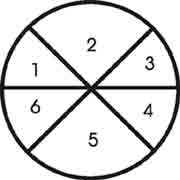 1, 2, 3, 4, 5, 6 inter related parts / sub-systems. Separated from the area which is outside the circle.
Area beyond circle is outside environmental supra -system. Characteristics of a system (1) Complete entity / whole:- everything in this world is a system in its own right. Everything can be considered a unified entity.
(2) Inter dependent Sub-parts:- The two or more parts within a system interact with each other and influence each other and they remain in a state of equilibrium. Each of them are sustaining each other.
Eg: Politics and character of society Economics and Administration.
The very system flows from the dynamic interaction of these inter-related parts.
(3) the system remains in a interaction with the environment.
Systems Approach believes that system interacts with environment & environment interacts with the system.
System itself is a Sub-System of the Environmental Supra System.
System remained in a state of interaction with Environmental Supra System.
There by environment influences system. Character of the system flows from his things:
(1) Dynamic interaction of Sub-Systems.
(2) Dynamic interaction of system with the environmental Supra- System.
There are other characteristics which further explain: Dear Candidate, This Material is from Public Administration Study Kit for Civil Services Main Examinations. For Details Click Here read more © 2012 www.upscportal.comStudy Kits for IAS Mains 2012.Books for Civil Services ExaminationsGet Your Dream Job. SUBMIT YOUR RESUME Online. |
| The Art of Writing Quality Answers in Public Administration Posted: 02 Aug 2012 01:32 AM PDT |





No comments:
Post a Comment