www.UPSCPORTAL.com : "(IGP) IAS Pre Paper - 2: GS - Basic Numeracy - Square Root & Cube Root (MCQ - 1)" plus 10 more |  |

- (IGP) IAS Pre Paper - 2: GS - Basic Numeracy - Square Root & Cube Root (MCQ - 1)
- (IGP) IAS Pre Paper - 2: GS - Basic Numeracy - Square Root & Cube Root
- Today's Important News: 15 December 2011
- (IGP) IAS Pre: GS - Science & Technology : Biology - The Nervous System (MCQ - 4)
- (IGP) IAS Pre: GS - Science & Technology : Biology - The Nervous System
- (IGP) IAS Pre: GS - Geography - World Geography General: Africa (MCQ - 4)
- (IGP) IAS Pre: GS - Geography - World Geography General: Africa
- (Current Affairs) International Events | December : 2011
- (Current Affairs) National Events | December : 2011
- (IGP) IAS Pre: GS - Indian History - Ancient India : The Vedic (MCQ -3)
- (IGP) IAS Pre: GS - Indian History - Ancient India : The Vedic (Part - 2)
| (IGP) IAS Pre Paper - 2: GS - Basic Numeracy - Square Root & Cube Root (MCQ - 1) Posted: 15 Dec 2011 03:05 AM PST
Basic Numeracy | ||||||||||||||||||||||||||||||||||||||||||||||||||||||||||||||||||||||||
| (IGP) IAS Pre Paper - 2: GS - Basic Numeracy - Square Root & Cube Root Posted: 15 Dec 2011 02:22 AM PST
Basic Numeracy | ||||||||||||||||||||||||||||||||||||||||||||||||||||||||||||||||||||||||
| Today's Important News: 15 December 2011 Posted: 15 Dec 2011 01:41 AM PST
Today's Important News (15-12-2011)
The HinduNational:
© 2011 www.upscportal.com  INTEGRATED Guidance Programme for IAS 2012(CSAT) INTEGRATED Guidance Programme for IAS 2012(CSAT)  :: CSAT Sample Papers :: Current Affairs | CSAT Syllabus | UPSC MAINS PAPERS Get Your Dream Job. SUBMIT YOUR RESUME Online. | ||||||||||||||||||||||||||||||||||||||||||||||||||||||||||||||||||||||||
| (IGP) IAS Pre: GS - Science & Technology : Biology - The Nervous System (MCQ - 4) Posted: 15 Dec 2011 12:23 AM PST
Biology | ||||||||||||||||||||||||||||||||||||||||||||||||||||||||||||||||||||||||
| (IGP) IAS Pre: GS - Science & Technology : Biology - The Nervous System Posted: 15 Dec 2011 12:13 AM PST
Biology | ||||||||||||||||||||||||||||||||||||||||||||||||||||||||||||||||||||||||
| (IGP) IAS Pre: GS - Geography - World Geography General: Africa (MCQ - 4) Posted: 14 Dec 2011 11:30 PM PST
World Geography General | ||||||||||||||||||||||||||||||||||||||||||||||||||||||||||||||||||||||||
| (IGP) IAS Pre: GS - Geography - World Geography General: Africa Posted: 14 Dec 2011 11:20 PM PST
World Geography General | ||||||||||||||||||||||||||||||||||||||||||||||||||||||||||||||||||||||||


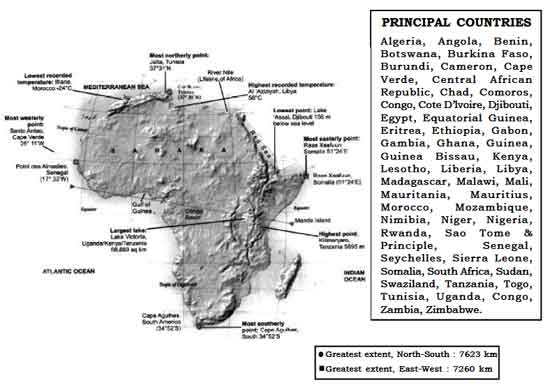
| Name | Location | African Countries Along the Sea |
Mediterranean Sea
| North of Africa | Morocco, Algeria, Tunisia, Libya, Egypt. |
Red Sea
| North East of Africa | Egypt, Sudan, Eritrea and Djibouti. |
| Indian Ocean | East of Africa | Somalia, Kenya, Tanzania, Mozambiquei and South Africa |
| Atlantic ocean | West of Africa | Morocco, Western Sahara, Mauritania, Senegal, Gambia, Guinea Bissau, Guinea, Sierra Leone, and Liberia, Ivory Coast, Ghana, Togo, Benin, Nigeria, Camernoon, Equatorial Guniea, Gabon, Congo, Zaire, Angola, Namibia, South Africa. |
| Mozambique Channel | East of Mozambique | Mozambique (West) and Madagascar (East). |
Important Gulfs and Bays
| Name | Location |
| Gulf of Guinea | South of Ivory coast, Ghana, Togo, Benin, Nigeria, Cameroon and Equatorial Guinea in the Atlantic Ocean. |
| Walvis Bay | West of Namibia, Atlantic Ocean |
| Maputo Bay | South East of Mozambique, Indian Ocean. |
Important Straits
| Name | Separates | Connects | ||||||||||||
| Strait of Gibraltar | Europe from Africa | Mediterranean Sea with Atlantic Ocean. | ||||||||||||
| Strait of Bab-el-Mandeb | Djibouti (Africa) from Yemen (Asia) | Red Sea with Gulf of Aden. | ||||||||||||
| Coasts of Africa | Countries | |||||||||||||
| Grain Coast | Sierra Leone and Liberia | |||||||||||||
| Ivory Coast | Ivory Coast | |||||||||||||
| Gold Coast | Ghana | |||||||||||||
| Slave Coast | Togo, Benin and Nigeria. | |||||||||||||
| (Current Affairs) International Events | December : 2011 Posted: 14 Dec 2011 10:56 PM PST
| ||||||||||||||
| (Current Affairs) National Events | December : 2011 Posted: 14 Dec 2011 10:44 PM PST
National Events
© 2011 www.upscportal.com INTEGRATED Guidance Programme for IAS 2012(CSAT):: CSAT Sample Papers :: Current Affairs | CSAT Syllabus | UPSC MAINS PAPERS Get Your Dream Job. SUBMIT YOUR RESUME Online. | ||||||||||||||
| (IGP) IAS Pre: GS - Indian History - Ancient India : The Vedic (MCQ -3) Posted: 14 Dec 2011 04:56 AM PST
Ancient India | ||||||||||||||
| (IGP) IAS Pre: GS - Indian History - Ancient India : The Vedic (Part - 2) Posted: 14 Dec 2011 04:42 AM PST
Ancient India |


| EVENT | SYMBOL |
| Birth | Lotus and Bull |
| Great renunciation | Horse |
| First Sermon | Dharmachakra or wheel |
| Nirvana | Bodhi tree |
| Pararinivana or Death | Stupa. |
| Three Ratna | Budha Dhaxnma, Sangha. |
Right Action (Samyak Action)
Right Living (Samyak Ajiv)
Right Effort (Samyak Vyayam)
Right Thought (Samyak Smriti)
Right Concentration (Samyak Concentration)
Buddhism believes in Law of Karman operating in this life and next. In this regard Buddha also talked about twelve-linked chain of causation. (Dvadas Nidan).
Other schools of Buddhist Thought
1. Vaibhasik of Vijanvada — Entire world is mental in structure. Ideas of the mind are the stuff of the world and the entire world originates from Alyavijana (Cosmic-consciousness) Asvaghosh was the most renowned leader of this school.
2. Madhyamika (Sunyavad) — There is nothing real in this world Ngaup was the chief exponent of this school.
Astika
1. Sankhya: It is a kind of dualistic ontology. It believes in two ultimate realities Prakrit and Purusa. Prakrit is made of a triad of fundamental attributes (Gunas) called Sattva, Rayas and Tamas. Purusa is pure consciousness.
2. Yoga System : It is applied Samkhya. It has devised a systematic method of bringing about the release of Purusa from Prakriti through mental mechanism.
3. Nyaya : It considers God as the creator who is free from Law of Karman. God is a soul and his wisdom, desire and effort are unbounded. Nyaya makes a detailed study of the sources of knowledge (Praman)
4. Valsesika : When the atoms of five basic elements begin to combine the creation of the world begins. Creation and dissolution of the world go on in cycles.
5. Mimansa : It is a philosophy of interpretation, application, and use of truths of Samhita and Brahmanas portions of the vedas. It has devised certain principles according to which the vedic mantras and their application in the field of sacrifies could be understood.
6. Vedant : According to this philosophy Atman and Parmatman are same. Partmatman is the ultimate reality and the whole world is an illusion (Maya). The whole philosophical thinking of this school is based on Upthiisahd, Bhagwatgeeta and Brahamsastra of Bhadrayan, called Prasthantrayi.
Buddhism
- Buddha was born at Lumbanivan in 563 B.C.
- His father was the king of Kapilvastu.
- He belonged to the clan of Sakyas, so he is called Sakyamuni and also Sirnha Sakya.
- Yasodhara was his wife and Rahul was his son.
- Buddha renunciated the wordly life when he was 29 years old.
- He meditated at Uruvela. There he got Nirvan. This place was later on known as Bodh Gaya.
- Buddha gave his first sermon at lsipatan, i.e. modern Sarnath.
- Bimbisar and Ajatsatru were his contemporary ruler of Magadh.
- Prasenjit of Khosla was also his contemporary.
- Bimbisar donated him Venuvan at Rajgriha.
- Anath Pindak donated him jetvan at Sravasti.
- Gautami was the first woman who joined the Sangha.
- Anand and Upali were his twomost eminent disciples.
- Buddha got his Mahaparinirvan at Kusinara.
Important Seats of Buddhism
- Sthavirvadi — Only ten people can get Buddhahood.
- Mahasanghika — Every one can get Buddhahood.
- Sautantrik — They wrote their texts in Sanskrit language.
- Sammitiyas — They believed in Atma (Soul)
- Hinyana — Buddha was only a great saint.
- Mahayana— Buddha was a great incarnation.
- Yogachar (Vijanvad) —They believed in Yoga and called it vijan.
- Sunyavad — There is nothing real in this world. It was also known as Madhyamika sect.
- Vajrayan — It believed in Tantra.
SECTSFOUNDERS
- Theravada - Mahakatyayam
- Mahasanghika - Mahakashyapa
- Sarvastivadin - Rahul bhadra
- Mahayan - Vasumitra
- Yogachar - Asang / Varusandhu
- Sunyavad - Nagarjuna
BUDDHIST TEXTS
Pitak-
(1) Sut Teachings of Buddha
(2) Vinay Discipline and order
(3) Abhidhamma Esoteric Philosophy
(1) Khuddak Nikaya of Sut Pikak has 15 tents.
- Dhammapad It is known as Bhagvatgita of Buddhism.
- Jatak This is collection of 550 stories of the previous births of Buddha.
(2) Vinay Pitak has three parts known as Parivar, Khandak and Vibhanga.
(3) Mahavibhasa sutra was written by Vammitra.
(4) Guhya Samaj Tantra and Manju Sn Miii Kalpa are the texts of Vajrayan.
Jainism
- According to Jainism there were 24 Trithankaras (Enlightened Monks).
- 23 Trithankar was Parsavanath. He was the son of the king of Kasi. He was a historical figure.
- Mahavira was born in the family of Jantrika.
- Yasodawas his wife and Priyadarsa was his daughter.
- Herennounced the family life when he was 30 years old.
- He got Kaivalya at Jrimbhakgram.
- His disciples were called Ganadhara.
- Sudharman became the head of the Jam sangha after him.
JAIN TEXTS
- 12 Angas
- 12 Upanga
- 10 Prakrinaka
- 6 Bhedsutra
- 4Sutra
- Churnika was commentary
- Way to Nirvana (Three Ratna)
- Right faith (Samyak Vishwas)
- Right knowledge (Samyak Gyan)
- Right conduct (Samyak Karma) Various Heterodox Philosophies
NIYATIVADA
- Third religious chief was Makhkhali Putta Gosal (supposed to be the real founder who popularised it).
- Followers are known as Ajivikas.
- Main profession was fortune telling and Astrology.
- Philosophy is based on Niyati (Destiny) which means everything in the world is predetermined.
- Makhkhali Gosala was a companion of Mahavira and this sect had a lot in common with Jainism.
- Bindusar was disciple of Ajivikas.
- Practised complete nudity and rigorous practices.
- Ashoka donated Barabar cvend king Dhasarath donated Nagarjuni cave to Ajivikas.
Materialism
- Developed by_Brihpor Charvaka.
- Followers are known as Charvakas or Lokyatas.
- Believed that nothing existed which could not be understood by five senses.
- Believed that earth, water, fire and air are the only elements.
- Believed that death was ultimate and everything ended after death.
- Believed that there was no soul, no god, no rebirth, no karm—'
Akriyavad/Antinomism
- Founder was Purana Kasyapa (a brahmin of Kasyapa gotra).
- Believed in the doctrine or non-action.
- Believed that action did not lead to either merit or demerit.
Akrittavada /Aagasvatavad/Anunada
- Founder was Pakuda Katyayana.
Unhchedavada /Jarvada /Annihilationism
- Founder Ajita Keshakamblin (meaning with the hair blanket)
- Believed in materialistic philosophy.
- Ajita was the earliest propounder of materialism
Bhagvatism
Facts about Bhagvatism
- Religion based on the idea of a supreme God Han or Narayan or Vishnu (later known as Vaishvanism).
- Main philosophy is Bhakti, complete surrender of self to God and salvation through his prasada.
- Did not believe in sacrifice and slaughter of animals.
- Rise in west among the tribe satvatas (a branch of yadavas) in Mathura region.
- Vasudeva-Krishna of Vrishni race was the chief God who discussed its philosophy in Bhagvad — Gita
- Vasudeva— Krishna was the disciple of Ghora Agnirasa.
- Bhagvat—Gita gives amphasis on one's wordly duties as dharma.
- Magasthenes refers to Krishna as Herakies of Sourseni tribe.
- Ten awatares
- Matsya (Fish)
- Kurma (Tortoise)
- Varaha (Bear)
- Narsimha (man-lion)
- Vamana (Dwarf)
- Parasurama (Rama with the axe)
- Rama
- Krishna
- Buddha
- Kalkin (As a man on a white horse with a sword in his hand, the awatara yet to come in Kaliyuga).
10. The earliest reference to Krishna is found in Chhandogya Upanishad. Here he is represented as pupil of Ghora Angirasa and son of Deviki.
11. The reference of Vasu4eva is found in Panini's Astyaohyagi and Patanjali's Mahabhashya.
12. The Besnagar Pillar inscription is associated with Heliodorus son of Dion and a native of Taxila, and ambassador from the court of the Indo-Greek king Antialkidas to King Bhagabhadra (Sungas) who erected a garduadhwaj at Besnagar and claimed himself a Param-Bhagvata.
13. Pancharatra (of five nights), a vaishnavite school gave the doctrine of Vyuha (emanations) according to which Sankarsana (aftother name of Bulrama) Pradyumna (Krishna's Son) and Aniruddha (Krishna's grand son) emerged out of Vasudeva.
14. Developed and popularised in South by twelve saints known as Alvars.
15. Total No. of Nayanar saints was 63 and they were shaiv.
- Tirumurai which is consider as fifth veda in which the preaching of Aiwar and Naynar saint were compiled in 11 volumes.
Saivism
© 2011 www.upscportal.com
INTEGRATED Guidance Programme for IAS 2012(CSAT):: CSAT Sample Papers ::
Current Affairs | CSAT Syllabus | UPSC MAINS PAPERS
Get Your Dream Job. SUBMIT YOUR RESUME Online.| You are subscribed to email updates from UPSCPORTAL.COM - Online Community for UPSC, IAS, CSAT, PSC, Civil Services Aspirants. To stop receiving these emails, you may unsubscribe now. | Email delivery powered by Google |
| Google Inc., 20 West Kinzie, Chicago IL USA 60610 | |

About Me

- ANIL
- A teacher with Vision to serve the mankind and committed to quality teaching.
No comments:
Post a Comment